Software as art / simulated systems / inspectable worlds

Aiyoyo builds software you can enter.

I make simulated machines, tiny protocols, and inspectable worlds. My projects treat computers as places: machines you can boot, stations you can visit, archives you can search, and systems whose rules are visible enough to touch.

Three works, one practice

Software designed as inspectable worlds.

Each project begins with an imagined world, then earns belief through real constraints: bytecode, memory maps, station keys, door manifests, graph schemas, timelines, archives, and interfaces that invite inspection.

The fiction matters because the mechanics are real. The mechanics matter because they make the fiction inhabitable.

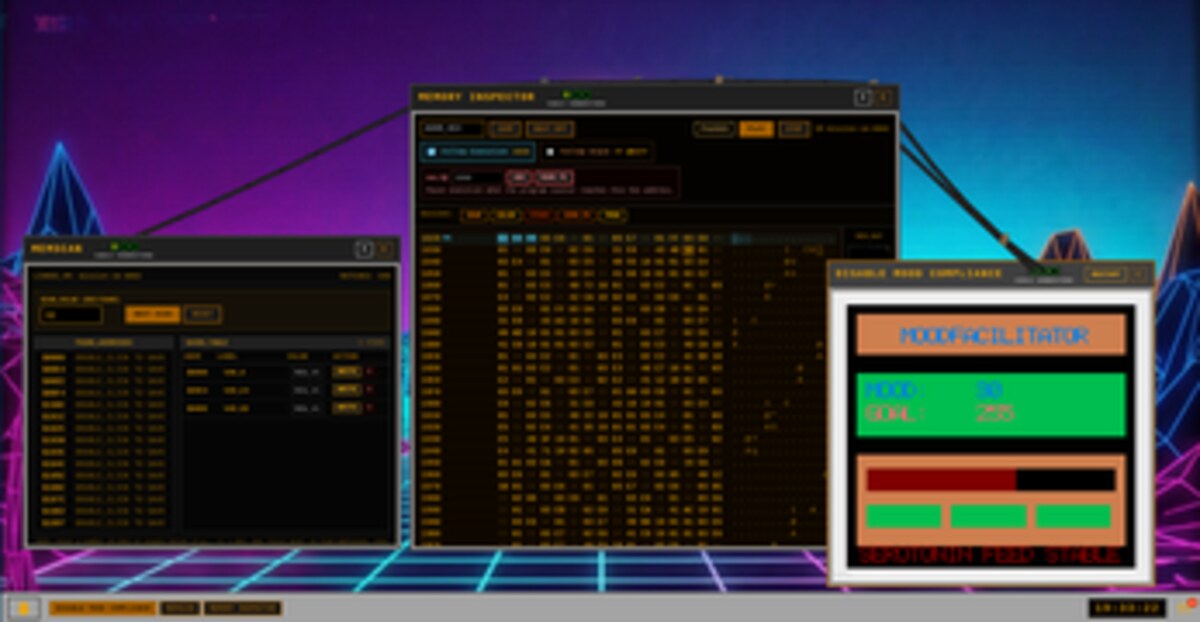
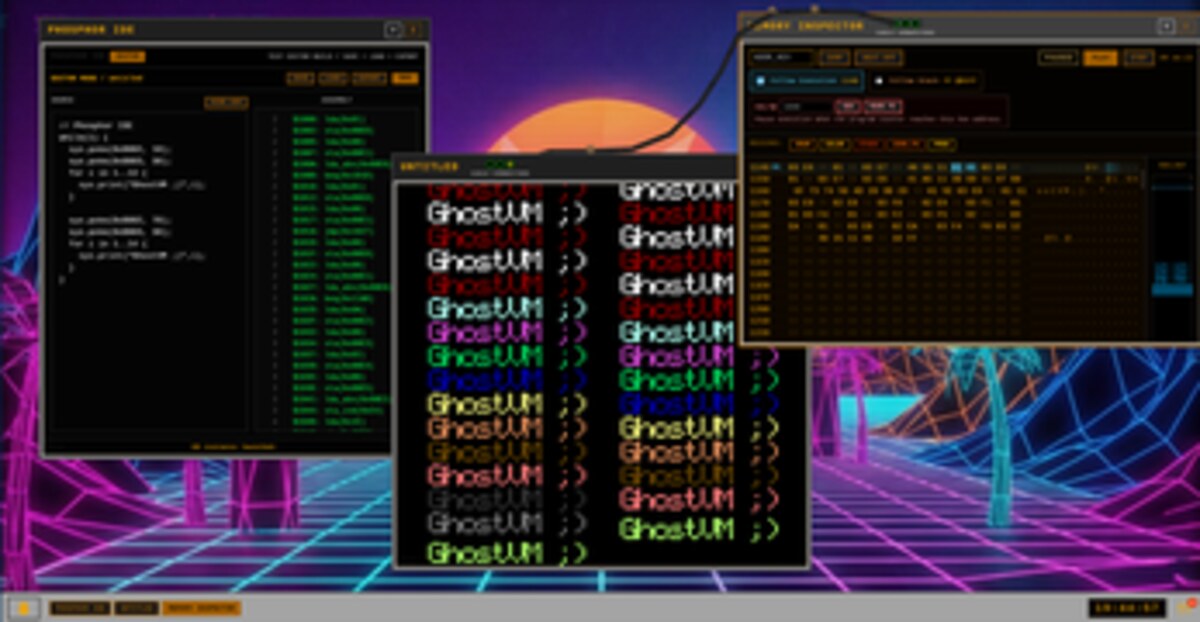
Ghost16 desktop with memory inspector, process list, and simulated phosphor feeder mission window
Ghost16: a custom retro computer with real bytecode, memory, Memory Inspector, Process List, and playable story missions.
Custom retro computer / toy machine / technical artifact

Ghost16

Ghost16 is a custom retro computer and software artwork: a small, playable machine recovered from a parallel 1987.

it is a fully functioning custom fantasy computer. It features its own bytecode, memory inspector, patch cables, and Neon scripting language, inviting you to boot a made-up computer and discover that its internals are real enough to poke. Through interactive BBS-style story missions, the fiction is experienced directly through the constraints, tools, and failure modes of the machine itself. It is both a game and an emulator of a computer that never existed in the first place.

Material
Go-based fantasy computer, Wails, React desktop, bytecode, Neon scripting, playable missions
Gesture
Open the machine and touch its memory
Feeling
A recovered computer from a parallel 1987
Open Ghost16 on itch.io
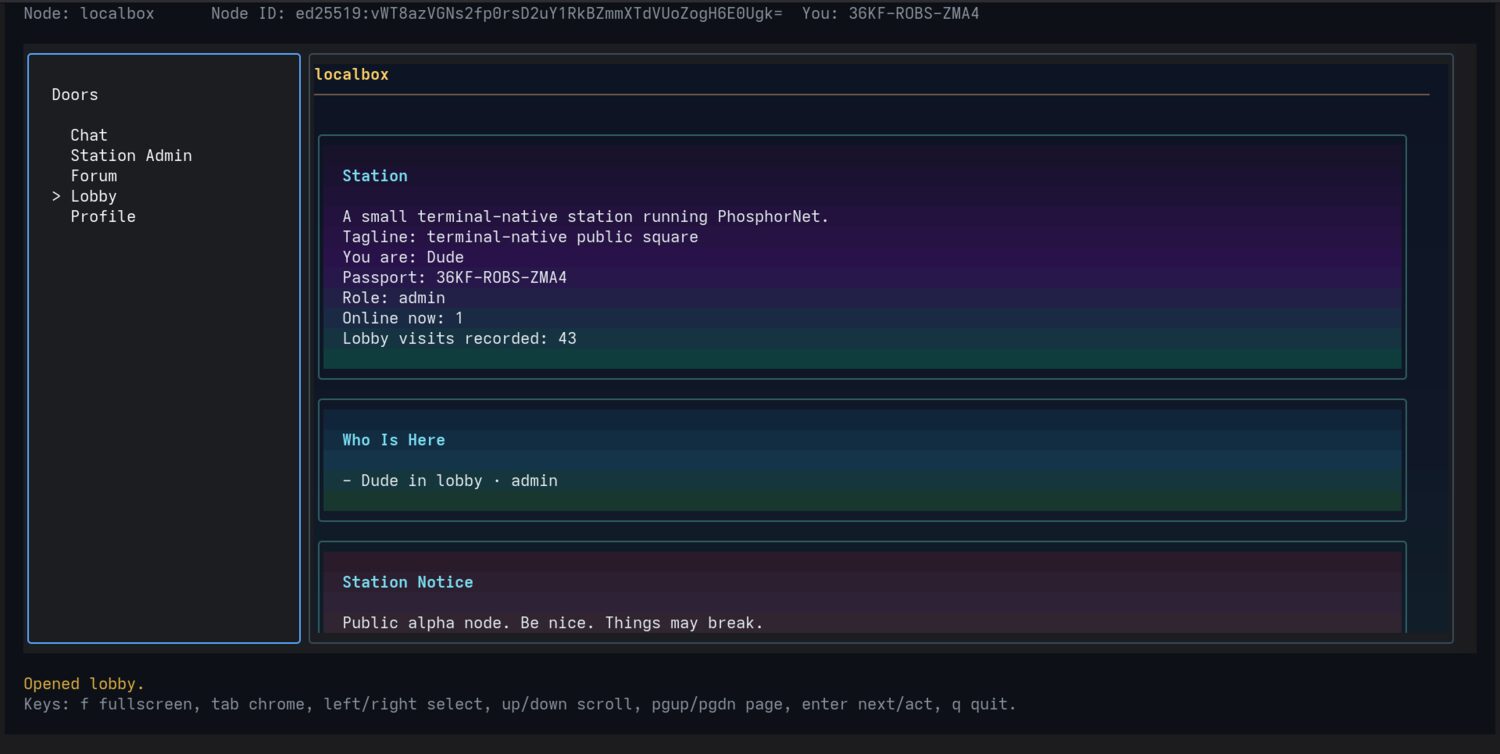
PhosphorNet terminal lobby showing station doors and structured panels
PhosphorNet: stations, doors, passports, and remote apps, all drawn in a terminal.
Terminal network / self-hosted doors / public-key login

PhosphorNet

PhosphorNet is an Open Source terminal app platform and network design experiment recovered from an alternate history.

Designed to transform server architecture into a visible, spatial landscape, it maps servers to 'stations' and remote applications to 'doors' secured by cryptographic passports. By drawing interfaces locally and exposing roles, trust, and manifests directly, it makes network authority visible—treating protocols not as hidden platforms, but as an inspectable, cooperative world that feels small enough to understand.

It asks a simple question: what if the Bulletin Board Systems of the 90s kept developing, changing and modernizing instead being shadowed by the emergent technology of web browsers. Then it answers that question with a fantastical platform made real by constraints and design decisions.

The dedicated PhosphorNet page puts the architecture, setup, door writing notes, config, and ops guidance in one technical place.

Try it out
1
$curl -fsSL https://aiyoyo.org/phosphornet/install.sh | sudo sh -s -- --full
2
$phosphord serve
3
$phosphor connect wss://localhost
Gumaru: an interactive spatial atlas mapping timeline events, family graphs, documents, and hypotheses.
Historical atlas / 3D globe engine / cinematic timeline narrator

Gumaru

Gumaru is an interactive historical atlas and spatial archive engine that renders history as a living 3D space.

Blending physical geography with database constraints, it features a 3D globe styled like a vintage parchment map, offline high-resolution terrain tiles, and static 3D models. It tracks timelines and family graphs chronologically, letting you navigate land deeds, diaries, and hypotheses with certainty thresholds.

The engine includes an offline text-to-speech pipeline that generates voiceover narration for timeline events, and supports scripted cinematic scenes with animated cameras and 3D primitives. Its capabilities are demonstrated in the interactive story of the Rain Cloud Teapot, which traces a century-long Eurasian family migration.

Material
Maps, family trees, ownership chains, generated documents, timelines, graph data, local archives, cinematic scenes
Gesture
Follow a place from evidence to memory to scene
Feeling
Opening a box of documents from a country that never existed, then watching one fragment come alive

Gumaru on itch.io

Desktop builds are distributed through the Gumaru itch.io project page.

The through-line

I like software that feels like a real place.

Not a feed. Not a dashboard. Not another flat web app pretending to be everything.

A computer.
A station.
A map.
An archive.
A little machine with rules.

Ghost16, PhosphorNet, and Gumaru are different attempts to capture the feeling of what computing used to feel like—tactile, discoverable, and self-contained. I like systems where the imagined layer and the underlying rules support each other: the imagination gives the machine a soul, and the machine gives the imagination weight.

contact@aiyoyo.org

Fiction with working parts

The imagined layer earns belief because the underlying mechanics are real, constrained, and touchable.

Protocols as places

Identity, trust, routing, and permissions become spatial: stations, doors, passages, and local rules.

Archives you can enter

Documents, maps, people, time, and reconstructed scenes become explorable structures instead of static lore dumps.